


Why your property’s AI should never touch the cloud.
The assistant in most smart homes is a microphone wired to somebody else’s data centre. It does not have to be that way.

Ask a popular voice assistant to dim the lights and a recording of your voice leaves your house, gets processed on a server you will never see, and comes back as a command. That round trip works. It is also the reason many hotel owners refuse to put assistants in rooms, and many families whisper around their own kitchen.
The assistant that stays home
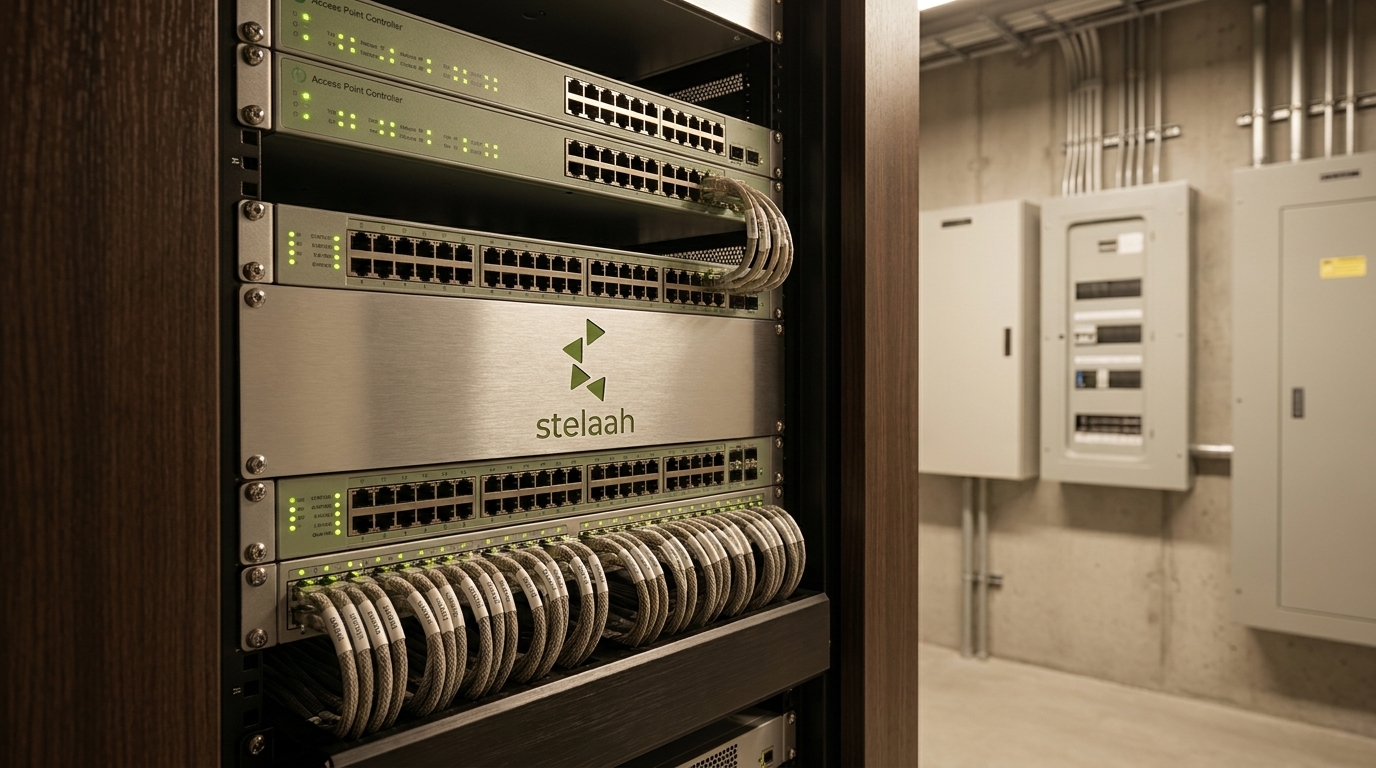
Every Stelaah installation can include a private AI system: a compact piece of hardware, installed alongside your network equipment, that understands voice and touch, runs your scenes and greets guests by name. It processes everything on that box. Nothing is sent to Stelaah. Nothing is received from Stelaah. The system cannot leak what it never transmits.
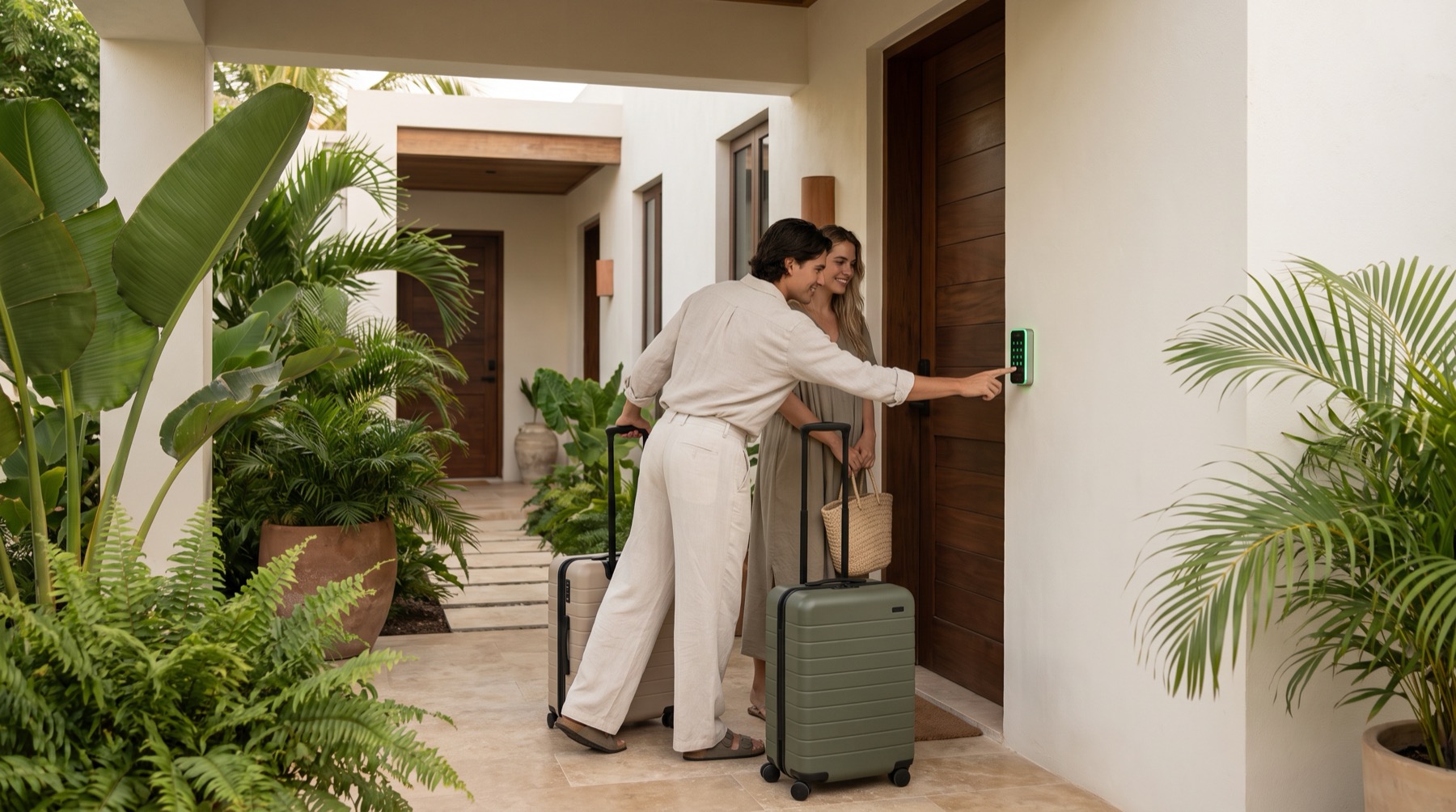
For a hotel, that changes the conversation entirely. You can greet a returning guest by name at the door and honestly tell them their preferences never left the building. For a home, it means the house that knows your routines is your house, not a subscription.
The system cannot leak what it never transmits.
What you give up: nothing useful
The honest trade-off list is short. A local assistant will not order groceries or read you the news. It will run your lighting, curtains, climate, security modes and welcome scenes faster than a cloud assistant, because the command never leaves the building. And it keeps working when the internet does not, which in the Caribbean is not a hypothetical.
Questions to ask any vendor
Wherever you buy, ask three things. Where is the audio processed? What happens when the internet goes down? And can the vendor see my data if they wanted to? If the answers are vague, the data is leaving the building. Ours are simple: on-premise, everything keeps working, and no, because there is no connection to us at all.
 stelaah technologies
Automation, security, networking, displays and monitoring. Planned, installed and supported as one system.
info@stelaahtechnologies.com