



The end of the room binder.
Somewhere in every hotel room is a laminated binder nobody has opened since 2019. Guests have moved on. The room should too.
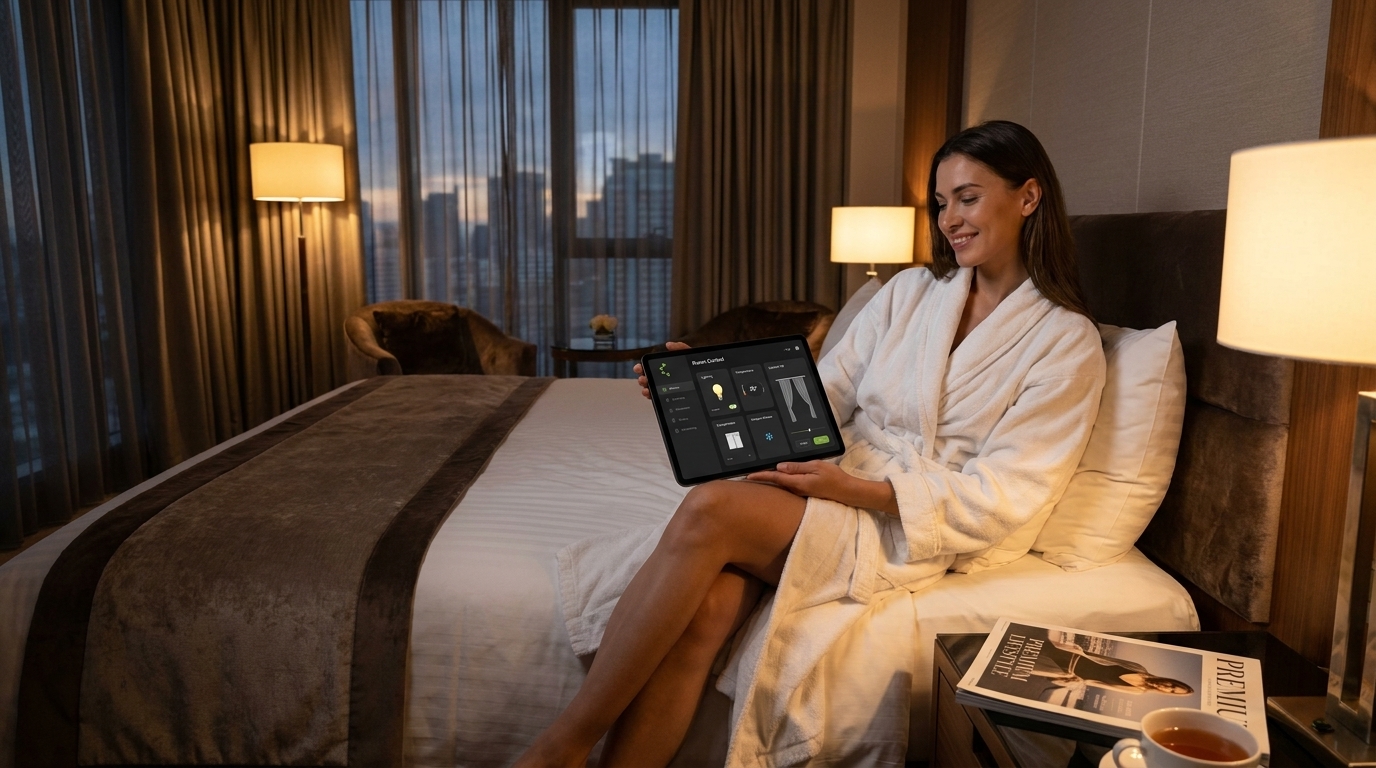
Watch a guest walk into a room they have never seen. They try three switches to find the one that matters, squint at a thermostat in Fahrenheit, and give up on the curtains entirely. Then they call the front desk to ask about breakfast, because the binder that answers it is under a room-service menu from another season.
None of this is a luxury problem. It is a communication problem, and it lands on your staff as phone calls.
One screen, no manual
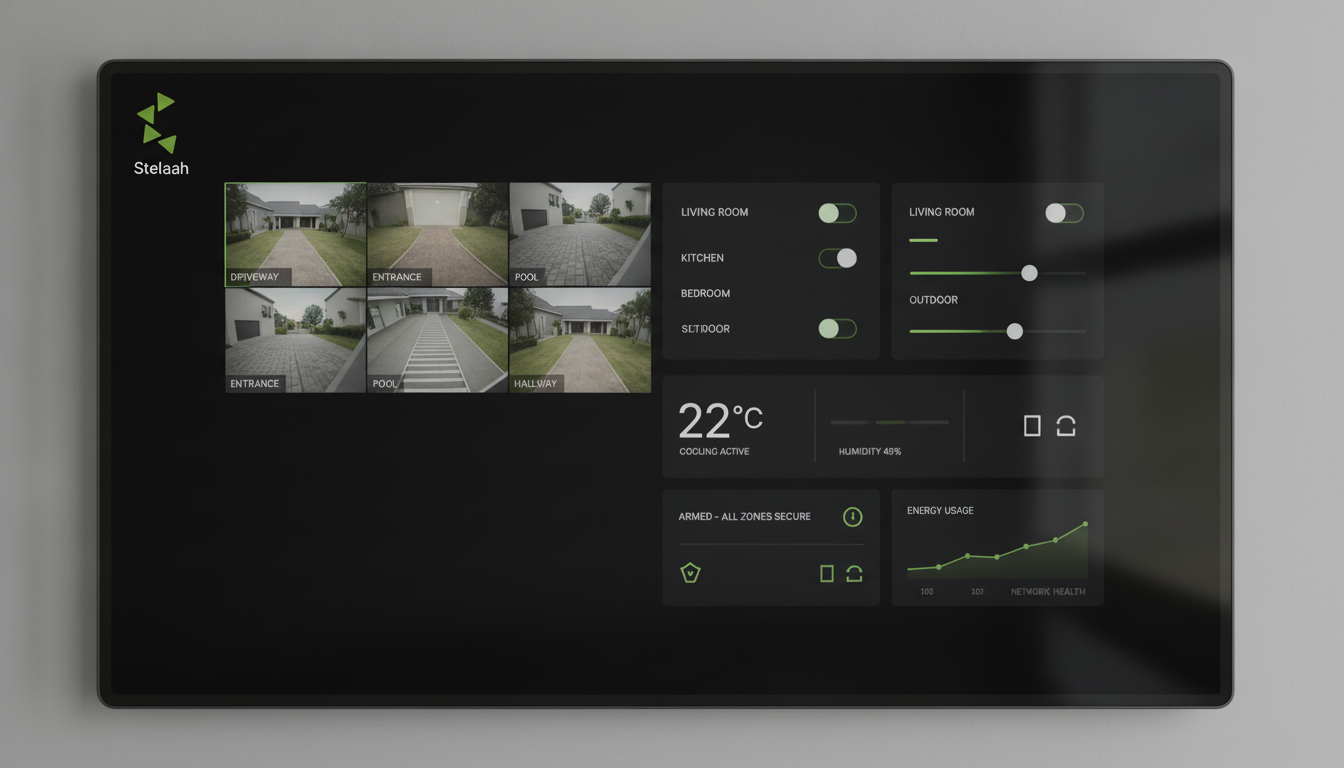
A good in-room tablet replaces all of it. The whole room lives on one calm screen: lights, curtains, climate, scenes, dining, spa hours, checkout. If a guest can use a phone, they can use the room. The test we hold ourselves to is simple. If a guest needs an explanation, the screen has failed.
If a guest needs an explanation, the screen has failed.
What the operation gets
Every request from the tablet is routed, logged and timed. Housekeeping requests go to housekeeping, maintenance to maintenance, with no radio chatter in between. Update the breakfast hours once and every room knows. The binder required a print run.
There is also a quieter benefit: fewer front-desk calls. Properties that put clear controls and answers in the room take the routine questions off the phone, which frees your best people for the conversations that actually need them.
Guests notice calm
Nobody writes a review about a binder. They do write about walking into a cool room where the curtains were already open to the sea, and everything they touched simply worked. That impression is engineered, and it starts at the nightstand.
 stelaah technologies
Automation, security, networking, displays and monitoring. Planned, installed and supported as one system.
info@stelaahtechnologies.com